
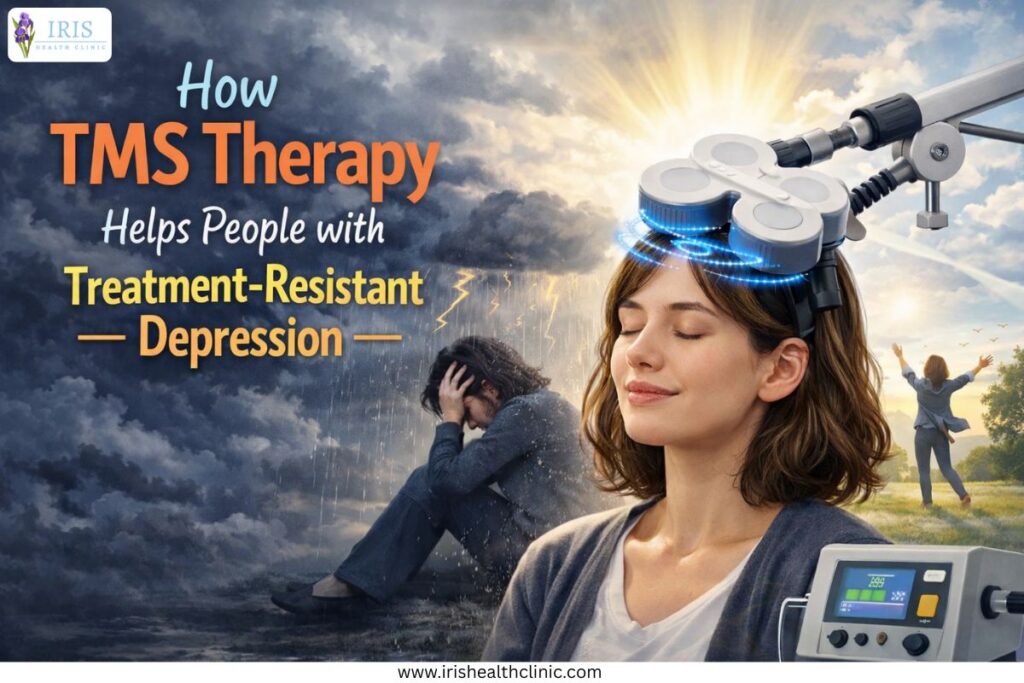
When depression does not respond to medications or traditional therapy, it can often feel like there is no way to go forward. At Iris Health Clinic, we know how exhausting and hopeless this journey can be. This is why we offer TMS Therapy, a breakthrough treatment that is changing lives.
Transcranial magnetic stimulation therapy is a non-invasive treatment that uses magnetic pulses to stimulate certain parts of the brain, giving people a new hope of recovery from their depression, regardless of what they have tried in the past. To learn more about how we can help you, visit irishealthclinic.com.
What Is Treatment-Resistant Depression?
Treatment-resistant depression is a major depressive disorder in which the individual does not respond to treatment after doctors have tried at least two anti depressant medications at adequate doses and durations. Researchers estimate that treatment-resistant depression affects 30% of people with depression.
The signs and symptoms may include:
- Sadness, emptiness, and hopelessness
- Excessive fatigue and lack of motivation
- Difficulty concentrating and making decisions
- Loss of interest in things one once enjoyed
- Thoughts of self-harm and suicide, in severe cases
If you are experiencing the signs and symptoms of treatment-resistant depression, then it is time to consider treatment-resistant depression therapy.
How Does Transcranial Magnetic Stimulation Therapy Work?
Transcranial magnetic stimulation therapy sends magnetic pulses directly to the prefrontal cortex, which controls mood, emotional responses, and decision-making. The magnetic stimulation increases activity in the brain to wake it up and resume normal functioning.
How Is Transcranial Magnetic Stimulation Therapy Performed?
Here’s an overview of the process:
- You sit in a comfortable chair. No anesthesia or sedation is required.
- A magnetic coil is placed on your scalp near your forehead.
- Magnetic stimulation occurs in short sessions over a period of 20 to 40 minutes.
- You are fully awake and alert during the process.
- No rest or recuperation time is required. You are free to drive yourself home.
The simplicity and noninvasive nature of the process make it one of the most “friendly” treatments of TMS for treatment-resistant depression.
Is TMS Therapy Right for You?
Not everyone is a candidate for TMS Therapy, but it is an excellent choice for many people. You may be a good candidate for TMS Therapy if you:
- Been diagnosed with treatment-resistant depression.
- Have failed to see significant improvement after taking two or more antidepressant medications.
- Cannot tolerate the side effects of psychiatric medications.
- Are looking for a non-drug, non-surgical treatment for mental health problems.
- Do not have metal implants in and near the head, such as cochlear implants and certain types of aneurysm clips.
What Kind of Results Should You Expect from TMS Therapy if You’re Suffering from Treatment-Resistant Depression?
Fortunately, clinical studies consistently confirm the efficacy of TMS therapy in alleviating symptoms of depression. In fact, studies published in top psychiatric journals reveal that 50-60% of people receiving TMS therapy experience significant symptom relief, and one-third achieve full remission from depression.
This is what a course of TMS therapy will do for you:
- Weeks 1 & 2: Some improvement in your mood, sleep, or a bit more energy.
- Weeks 3 & 4: Noticeable symptom relief.
- Weeks 5 & 6: Major improvements in your ability to function and emotional stability.
- After treatment: Relief can last from 6 to 12 months or longer with maintenance treatments.
What Makes TMS the Best Treatment for Resistant Depression?
Today, many experts agree that TMS is the best treatment for resistant depression due to its efficacy and safety. Here’s what makes it different from other treatments:
- No surgery, no needles, no hospitalization
- FDA cleared to treat major depressive disorder
- No significant side effects, except for some minor discomfort in the scalp or headache in early treatments
- No impact on the entire body, only the brain
- Most insurance plans cover TMS treatment
The best treatment for resistant depression is one that works with minimal inconvenience to your life. And TMS does that.
How Many Sessions Are Needed?
The standard treatment for therapy-resistant depression with TMS requires a series of:
- 36 treatments over a period of 6 to 7 weeks
- 5 times a week, Monday through Friday
- Each session lasts between 20 and 40 minutes
- No downtime or disruption to your lifestyle
Newer protocols such as Stanford Neuromodulation Therapy (SNT) now offer a treatment that can be completed in as little as 5 days, with preliminary results indicating outstanding success. Your healthcare provider will recommend the best treatment for your needs.
Your Next Step Starts at Iris Health Clinic
Are you or a loved one frustrated with the lack of improvement from traditional treatments for depression? Do you feel like you have to search for answers alone? You don’t have to search for answers alone anymore.
At Iris Health Clinic, our caring and highly skilled professional staff commit to helping you achieve the best possible outcomes with our latest transcranial magnetic stimulation treatments. We commit to helping you take your first step towards a better tomorrow. Visit our website at irishealthclinic.com to schedule your consultation today!
Key Takeaways
- The FDA has cleared TMS Therapy as a non-invasive treatment that provides a safe treatment option for people whose depression did not improve with antidepressant medications.
- Nearly one-third of people diagnosed with major depressive disorder are afflicted with treatment-resistant depression.
- Transcranial magnetic stimulation therapy is effective because it stimulates underactive brain areas that are responsible for mood regulation.
- The majority of therapy sessions of TMS for treatment-resistant depression are completed in 4 to 6 weeks, and there are minimal side effects.
- Treatment-resistant depression therapy, such as TMS, has shown response rates as high as 50 to 60%.
FAQs:
1. Is TMS Therapy Painful?
No, TMS Therapy is not painful, and patients report a mild tingling or tapping sensation on their scalp during treatment.
2. How soon does transcranial magnetic stimulation therapy show results?
Many patients report changes in their condition in 2-3 weeks of treatment.
3. Can TMS for treatment-resistant depression be combined with medications?
Yes, TMS Therapy is effective in conjunction with medications or therapy to improve treatment outcomes.
4. Is treatment-resistant depression therapy with TMS covered by insurance?
Many insurance companies cover TMS Therapy if patients have treatment-resistant depression and have tried medications.
5. What is the best treatment for resistant depression if TMS does not work?
There are other treatment options, such as ketamine infusion, ECT, or psychotherapy, which you can discuss with your healthcare provider.