
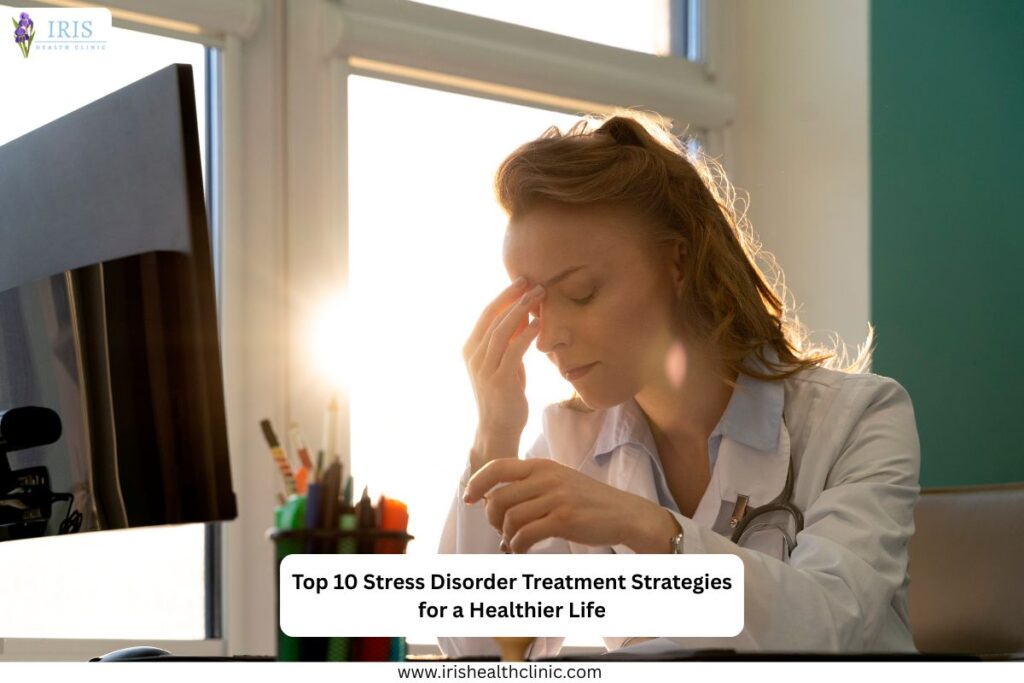
Stress disorders have a major impact on the emotional state, physical condition, relationships, and daily activities of the person. If stress is persistent or intolerable, stress disorder treatment by a professional is a must for the patient to be at ease in the future. At Iris Health Clinic, the staff provides evidence-based mental health care according to the needs of the individual and assists patients to regain their balance and resilience.
What Is Stress Disorder Treatment?
The aim of stress disorder treatment is to work with people while they are trying to get over stress, which is a huge factor in the emotional and physical aspects of their life and in their daily activities. Stress disorders can cause symptoms like anxiety, irritability, and so on, which are akin to those of chronic stress, but they are more prevalent.
The treatment of stress disorder is a collective effort of psychological therapies that are based on strong pieces of evidence, psychiatric care, and lifestyle support to tackle both the symptoms and the potential root causes of stress. In a treatment plan, individual therapy, medication management, mindfulness, and holistic wellness practices may all be included. Sometimes, stress disorders might co-occur with mood disorders, and in such cases, the plan would integrate the options for bipolar disorder treatment and the monitoring of your medication closely.
Here are the 10 best treatment methods for stress disorders that lead to a healthier and more stable life.
1. Comprehensive Mental Health Evaluation
One of the first steps in the effective stress disorders treatment is the conducting of a thorough psychological evaluation. The evaluation allows for the identification of the primary problems which could be anxiety, depression, PTSD, or mood disorder. Moreover, stress symptoms may sometimes be similar to that of other conditions and hence the patient may need severe treatment options like bipolar disorder treatment.
2. Cognitive Behavioral Therapy (CBT)
CBT is one of the most powerful treatments for stress-related disorders. It assists people in:
- Recognizing negative thought patterns
- Building more effective coping mechanisms
- Enhancing emotional regulation
Basing on its effectiveness, CBT is largely incorporated in structured programs for treating stress disorders.
3. Medication Management (If necessary)
Moderate to severe stress disorders may warrant the recommendation to use medication as part of the treatment plan. Based on this possible recommendation, medications may range from the use of antidepressants, anti-anxiety medication, and mood stabilizers to the common recommendation of viewing these medications as an option to adjust the balance of neurotransmitters in the brain. In some instances, when stress symptoms are related to mood swings, the psychiatrist may choose to include medication for a diagnosis of bipolar disorder as part of the overall treatment plan.
The use of medication is monitored closely in conjunction with therapy for the greatest potential for positive results.
4. Mindfulness and Stress Reduction Techniques
Among the techniques that belong to mindfulness activities, meditation and the like, breathing exercises and grounding are the most powerful ones that help to calm down and regulate the nerves all over the body. Moreover, these techniques are used as a therapy for stress-related disorders by lessening the emotional responses and improving the mental clarity.
5. Trauma-Informed Therapy
The healing of the trauma that is not completed can be the main reason for the prolonged stress. The trauma-informed methods ensure that the healing process will be an experience that is safe, supportive, and empowering for the patient. The traumatic past could be the reason for the patient to go on suffering from long-term stress and emotional turmoil but if it is dealt with properly healing will be the outcome for the patient.
6. Lifestyle and Behavioral Interventions
Recovery is mainly supported by healthy routines. Stress disorder treatment usually involves counseling on:
- Sleep hygiene
- Nutrition
- Physical activity
- Time management
The alterations lead to emotional stability and stress trigger’s lessening of vulnerability.

7. Group Therapy and Peer Support
Group therapy brings about a sense of connection and mutual understanding. The patients are able to learn from others who are undergoing similar hardships, which in turn helps to reduce the feeling of isolation and to make the recovery process more acceptable within the framework of structured stress disorder treatment programs.
8. Dual Diagnosis Care for Co-Occurring Conditions
Stress disorders often accompany conditions like depression, substance use, or bipolar disorder. The approach of integrated treatment guarantees that all conditions are treated simultaneously. At Iris Health Clinic, we provide individualized treatment options for bipolar disorder along with stress management therapies when necessary.
9. Psychiatric Monitoring and Ongoing Support
Stress recovery is not uniform for everyone. Regular psychiatric reviews guarantee that the treatment plans are altered according to the patient’s advancement. Medication regimens, therapy changes, and relapse prevention strategies are significant elements of good stress disorder treatment.
10. Holistic and Wellness-Based Approaches
Integrative methods like yoga, relaxation training, and wellness education are considered complementary to the conventional therapy. They enable the clients to get through the treatment confidently and also not only but also enhance their quality of life.
What Are The Reasons For Choosing Iris Health Clinic?
Just like other patients, depression, anxiety, and mental health issues can result from stress and thereby weaken one’s overall health. Iris Health Clinic offers a compassionate and evidence-based approach for mental health treatment. Our incredible team with different abilities and skills is made up of:
- Stress disorder treatment tailored to the patient
- Psychiatric and therapeutic care combined
- Thoroughly monitored medication management with bipolar disorder treatment if the situation warrants it
- Our objective is to assist our clients in attaining Stable Recovery and Emotional Well-Being.
Frequently Asked Questions
- What do treatment of a stress disorder include?
Treatment of a stress disorder mainly consists of psychotherapy and in some cases, medication, meanwhile a lot of lifestyle changes are done for chronic stress and emotional exhausted people and they also get the support to manage associated mental health problems.
- How do I tell if I should see a therapist for stress?
If the stress situation affects one’s sleep, work, personal life, or emotional stability negatively; or if the stress problem persists after trying some self-care methods, then that is the point of time to go see a therapist about the stress.
- Can a stress disorder and bipolar disorder co-exist?
Definitely! Stress can worsen the mood swings and therefore, it is often necessary for a person to undergo treatments for both bipolar disorder and stress.
- Is it a must to go for medication for a stress disorder?
Not necessarily. There are a lot of people who only use therapy as their means of managing their stress disorder. But for those who have very severe symptoms or if the stress is brought about by a mood disorder or anxiety disorder, medication may be a part of the recommendation.
- What is the usual duration for the treatment of a stress disorder?
Duration of treatment varies depending on severity of symptoms, presence of co-occurring behaviors, and the patient’s response to treatment. While some individuals may get through a few weeks’ treatment, others might take longer for recovery.