
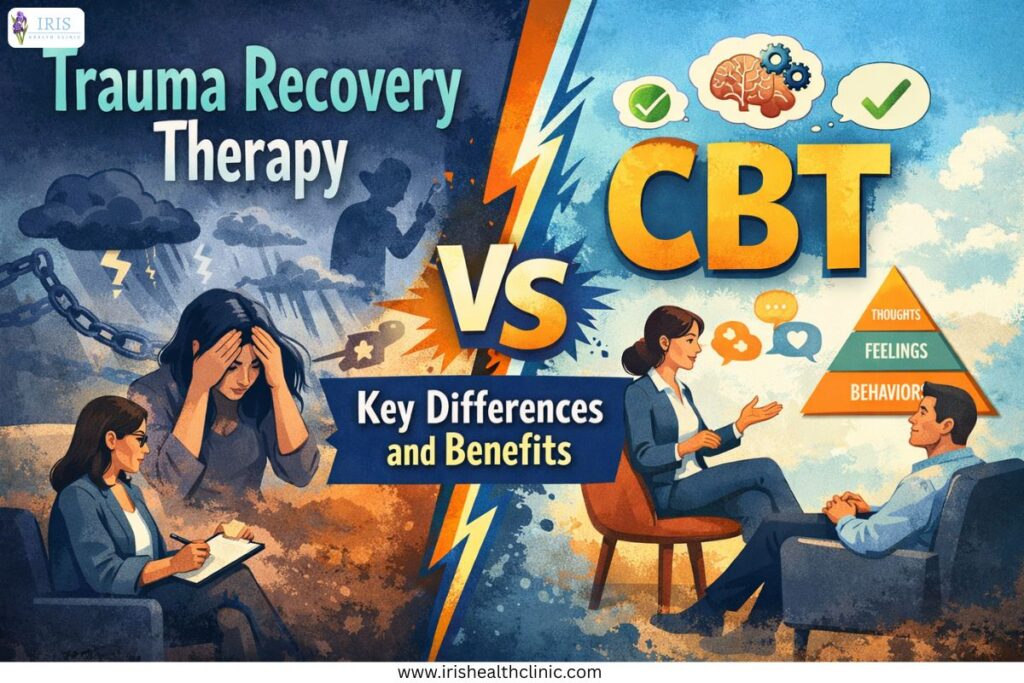
When life’s toughest times have their impact, the appropriate therapeutic approach can be the only means to overcome these experiences. Trauma recovery therapy has developed into a distinct area of practice, specifically aimed at the profound effects of trauma, and it offers a route to real healing. Trauma-focused approaches, unlike more traditional methods, recognize that the brain encodes traumatic memories differently, requiring specific techniques for successful processing.
A common question arises: is standard cognitive behavioral therapy (CBT) or trauma recovery therapy the superior choice? The answer hinges on the type and intensity of the trauma. At Iris Health Clinic, our experienced clinicians understand these nuances and provide customized therapeutic strategies to support each patient’s individual journey toward healing.
What Exactly Is Trauma Recovery Therapy?
Trauma recovery therapy is a group of specialized therapies that assist individuals in working through and recovering from the experience of trauma. Trauma recovery therapies recognize the reality that trauma is so much more than just the psychological experience and that it affects the entire person—the nervous system, the body, and the brain.
Approaches such as Eye Movement Desensitization and Reprocessing (EMDR), Somatic Experiencing, and trauma systems therapy are designed to help the body let go of the trauma it’s holding onto and to reconfigure the brain’s pathways.
How Does CBT Differ from Trauma-Focused Approaches?
CBT is built on the idea that our thoughts shape how we feel and act. It’s a useful tool for a range of mental health issues, but its main focus is on:
- Pinpointing negative thought patterns.
- Questioning distorted beliefs.
- Building coping strategies.
- Putting behavioral changes into practice.
Trauma recovery therapy, on the other hand, digs deeper, tackling the physical and neurological effects of trauma. It understands that traumatic memories often exist as disjointed sensory fragments, not neatly packaged stories, which calls for specialized processing methods.
What Makes Trauma Informed Care Essential?
It’s a fundamental change in how we provide mental health services. This approach acknowledges the far-reaching effects of trauma and the various ways people can heal. The Substance Abuse and Mental Health Services Administration (SAMHSA) outlines six core principles of trauma-informed care: safety, trustworthiness, peer support, collaboration, empowerment, and cultural sensitivity.
Trained practitioners foster environments where clients can safely examine their painful pasts, free from the risk of further harm. This is absolutely essential for effectively healing childhood trauma and addressing deep-rooted emotional pain.
Can These Therapies Help with Healing Childhood Trauma?
Healing childhood trauma requires specific understanding. This is because experience has a significant effect on developing the brain and how we form relationships. Child trauma tends to manifest itself differently than adult trauma when considering:
- Our self-perception and feelings of self-worth
- How we relate with other people and our attachment styles
- Our capacity to control our emotions
- Our physical health and how we react under stress
Both trauma recovery therapy and modified cognitive-behavioral therapy can aid in childhood trauma recovery. It is important to spot a trained childhood trauma therapist near me who understands why developmental trauma is essential for effective treatment.
What I Should be Looking for in a Trauma Therapist?
While searching for “therapy for teenager near me” or “therapist childhood trauma near me,” the following key factors must be kept in mind:
- Specialized skills in trauma therapies (EMDR, Somatic Experience, TF-CBT)
- Experience with your specific age group
- Trauma-Informed Care concepts and principles being understood.
- Cultural Competency & Sensitivity
- Evidence-based practice approaches
There is no reason not to ask any prospective therapists of your own choice about their background, method, and experience dealing specifically with what you are experiencing.
Which Therapy Offers Better Long-Term Results?
The appropriateness of each therapy is also dependent on personal circumstances, type of trauma, and individual preference. Research suggests:
These approaches work best under the following conditions-
- Managing PTSD symptoms
- Handling specific shock-producing incidents
- Processing the recovery from childhood trauma
- dealing with dissociation or flashbacks
CBT has been proved effective for:
- Anxiety and repression resulting from trauma
- Modifying particular behavioral parameters
- Applying effective coping mechanisms
- Addressing negative thought cycles
Right Support for Your Healing Journey
Right Support provides assistance, and for each person healing experience differs, and trauma recovery has no standard solution. Whether you are looking for “trauma-informed near me” or browsing different therapies, the most significant thing, in this case, is to find the right person to work on your issues to ensure that you feel safe with them.
At Iris Health Clinic, our compassionate trauma team has the expertise to provide a comprehensive consultation to help ensure you receive the care that best suits your needs. Our trauma recovery approach combines trauma-informed care practices with evidence-based trauma recovery therapies to provide a conducive setting where genuine change becomes possible.
Key Takeaways
- Trauma recovery therapy deals with how traumatic memories are processed within the brain.
- CBT targets thought pattern modification as well as behaviors, however, it does not necessarily incorporate the physiological effects of trauma.
- Trauma informed care builds a safe and supportive environment that is vital for recovery.
- Specialized methods such as trauma systems therapy take into consideration the wider context in relation to an individual’s life.
- In both forms of therapy, there are advantages and disadvantages, and at times the combination of both can lead to the best outcome.
FAQs:
- How long does trauma recovery therapy typically take?
Treatment can last months or years, depending on trauma severity and individual characteristics. Many see improvement in 8-12 sessions.
- Is trauma therapy suitable for children?
Children-specific trauma therapies like TF-CBT and play therapy have been shown to repair childhood trauma.
- Can I combine CBT and trauma therapy?
Yes, many therapists use trauma-focused processing and CBT for daily coping.
- Does insurance cover trauma recovery therapy?
Most insurance policies cover qualified mental health providers’ trauma therapy. Contact your provider for coverage.
- What if I forget my trauma?
Traumatic memory gaps are prevalent and therapists use whatever facts and feelings are available for trauma recovery.