
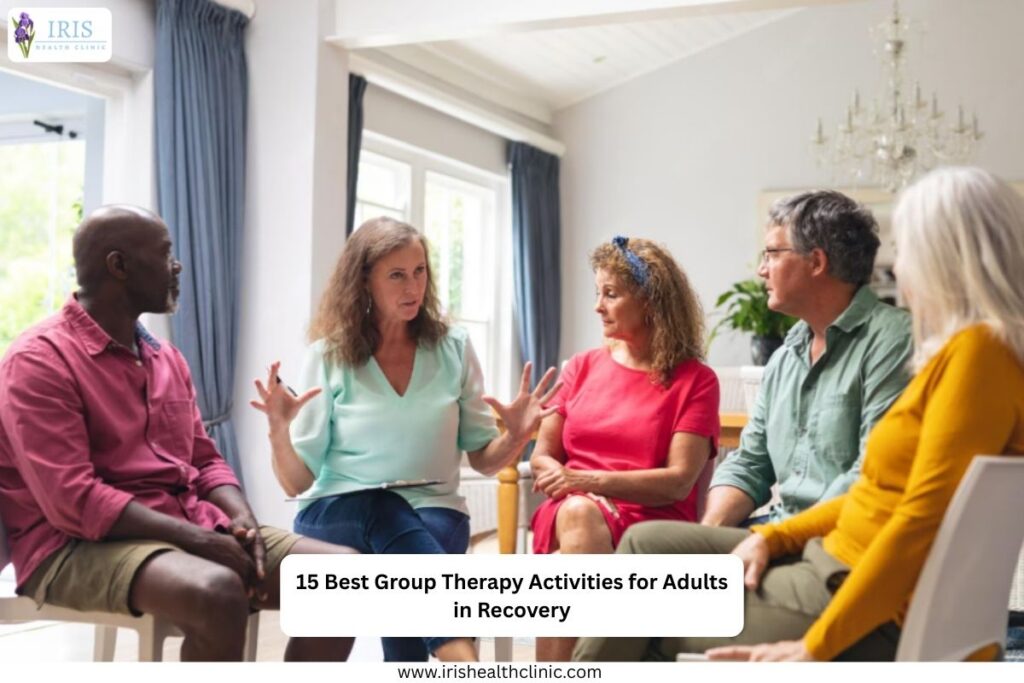
The Iris Health Clinic group therapy program needs to achieve its goals through active participant learning which includes using evidence-based treatment methods that feature both Cognitive Behavioral Therapy and Dialectical Behavioral Therapy. The following section explains the operational aspects of this method while demonstrating its successful outcomes.
Below are the 15 Best Group Therapy Activities for Adults in Recovery
1. Check-In Circles
During our first session, participants must respond to specific questions which include “What was one challenge that you faced this week?” and “What coping skill did you utilize?”
2. Relapse Prevention Planning
Through this learning segment, participants create a personal map which displays their potential relapse sources including people and environments and emotional triggers. Participants develop a coping strategy to manage their identified triggers.
3. Cognitive Restructuring Exercises
The Cognitive Behavioral Therapy worksheets guide participants to identify their negative unproductive thoughts which they will learn to disprove through scientific evidence-based methods. The thought “I always fail” transforms into the statement “I have maintained 30 days sober.”
4. Mindfulness Meditation
The participants use guided breathing body scanning and grounding techniques to manage their cravings and anxiety. Mindfulness helps people improve their ability to control emotions while they manage their stress levels.
5. Role-Playing Scenarios
Members participate in role-playing activities which replicate actual dangerous situations that include events where drugs are offered to them at a party. They then practice how to say “no” assertively.
6. Emotion Identification Activities
Participants use emotion charts and reflective group therapy exercises that help them identify their emotions correctly. People need to recognize emotions such as shame and anger and loneliness because this understanding enables them to manage their impulses.
7. Gratitude Sharing
The members share their positive life experiences and their personal strengths which they have developed during the previous three days. The activity creates a beneficial effect because it redirects attention from negative situations toward the positive accomplishments of the participants.
8. Goal-Setting Workshops
The participants establish SMART goals which require them to define specific objectives and create measurable targets while determining what they can achieve through relevant activities within a specific timeframe. Their motivation receives an increase through the feedback which they obtain from other group members.
9. Psychoeducation Sessions
Addiction affects the brain and the process of rebuilding brain function uses healthy coping mechanisms. The process helps individuals to recover from their guilt feelings.
10. Journaling and Reflection
The guided journaling prompts which include the question What triggers surfaced this week help members to develop their self-awareness. The members need to share their thoughts with the group because it helps to build a trusting atmosphere.
11. Art or Creative Expression
Members express feelings about recovery by drawing emotions. It’s helpful when words are difficult to find.
12. Stress-Management Skills Practice
Members learn DBT techniques like paced breathing to help manage cravings.
13. Values Clarification Exercises
Members identify values like family, health, honesty, etc. Then they compare these values to behaviors. It’s helpful to overcome behaviors.
14. Trust-Building Activities
Exercises like sharing with a partner help members overcome trust issues.
15. Open Process Groups
Facing issues together, members talk through what’s happening right now. In response, others who relate share thoughts that help move things forward. Guidance from therapists keeps the tone kind, clear, and aimed at progress.
Why These Exercises Matter
What happens here follows clear purpose, each task shaped to build resilience, sharpen awareness of feelings, one person at a time. Sitting together cuts through loneliness, creates space where responsibility grows naturally, moments unfold without pressure. Learning how to respond, not react, takes place live, face to face, within boundaries that feel secure.
Every step at Iris Health Clinic fits together through careful guidance from certified experts. Because healing takes shape differently for each person, routines adjust to adult lives touched by addiction, deep emotional wounds, ongoing worry, heavy moods, or overlapping struggles. Resilience grows quietly here, built slowly with support that lasts. Stability becomes possible, not promised.
Frequently Asked Questions
- Could these workouts fit every phase of healing?
Of course. The tasks shift depending on if a person is just starting out, staying steady, or working to avoid setbacks.
- A single gathering of group therapy usually runs how long?
Some meetings run an hour, others stretch toward ninety minutes, length shifts based on how the plan is built.
- Do participants have to share personal details?
Folks often pass things around, though nobody has to. Some jump in right away, others take their time.
- Can these exercises be used in outpatient programs?
For sure. A lot of these methods work well when people come in for treatment but go home after. Some fit even better outside full, time programs.
- How does group therapy help maintain long-term sobriety?
The program assists people in developing skills to handle life challenges while acquiring emotional intelligence and building their vital support network which acts as essential elements for preventing relapse and sustaining their sober lifestyle.
Iris Health Clinic offers group therapy services which help individuals who want to achieve their next healing milestone together with their loved ones.