
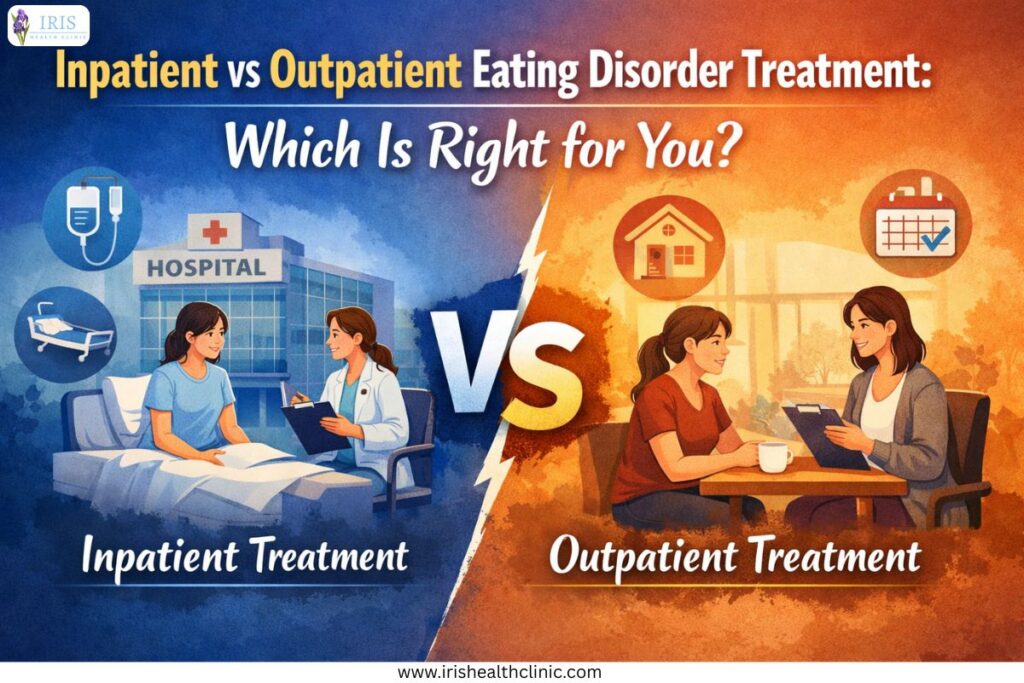
Taking the step to get help for an eating disorder is one of the bravest actions a person can take. Once you have made the decision to get help for your disorder, the next major concern is what kind of treatment you will need. The decision between inpatient eating disorder treatment and outpatient eating disorder treatment can be very daunting, particularly since you have to deal with an issue of this personal nature.
At Iris Health Clinic, we know that eating disorder treatment is not a one-size-fits-all solution. Our team of dedicated and compassionate specialists works with each of our patients to formulate an eating disorder treatment plan tailored to your specific condition.
What Is Inpatient Eating Disorder Treatment?
Inpatient eating disorder treatment is a type of care wherein the patient is required to reside at the treatment facility. This type of care can last from weeks to months. This is the most intense form of eating disorder treatment.
Who Typically Needs Inpatient Care?
- Patients who have a low BMI and are at health risk
- Those who do not respond well to other levels of care
- Patients who experience co-occurring mental health disorders
- Those who are at risk of self-harm and have thoughts of suicide
- Those who do not have a conducive home environment to support their recovery process
What Is Outpatient Eating Disorder Treatment?
Outpatient eating disorder treatment permits the patient to reside at home and attend scheduled sessions, appointments, and counseling sessions throughout the week. Outpatient treatment can be effective for individuals who are not in crisis, yet require assistance with their eating disorder.
Is Outpatient Care Right for Me?
Outpatient care can be an effective solution for individuals who:
- Are medically stable and not at risk for immediate physical harm
- Have a strong support system at home
- Are transitioning from an inpatient program
- Are experiencing mild to moderate symptoms of an eating disorder
- Desire to apply what they learn about recovery outside the treatment center
How Does Cognitive Behavioral Therapy Support Recovery?
Cognitive Behavioral Therapy for eating disorders (CBT-E) is one of the most researched and effective therapies for eating disorders and is offered in both inpatient and outpatient eating disorder treatment. Cognitive Behavioral Therapy helps individuals identify and challenge their negative thoughts and beliefs about themselves and their eating.
With cognitive behavioral therapy for eating disorders, individuals can learn to identify their triggers and establish a healthier relationship with food and their bodies. It is offered intensively in inpatient eating disorder treatment and is combined with other therapies such as Dialectical Behavior Therapy (DBT) and family therapy.
Inpatient vs Outpatient: What are the Main Differences?
Here is a brief comparison to give you a general idea of the main differences between these two treatment options:
- Level of Supervision: Around the clock supervision is present in inpatient treatment, while only part-time supervision is present in the case of outpatient treatment.
- Medical Monitoring: Around the clock medical monitoring is present in the case of inpatient treatment, while regular monitoring is present in the case of outpatient treatment.
- Flexibility: The personal and professional life of the patient continues during the treatment period in the case of outpatient treatment.
- Cost: Inpatient treatment is more costly compared to the treatment provided during the outpatient treatment.
- Duration: In this kind of treatment, the duration of the treatment can range from a few weeks to months, while the duration of the treatment through the outpatient treatment option can range from a few months to years.
- Suitability: For this form of treatment, the treatment is suitable for people who are more seriously ill and unstable. On the other hand, the outpatient treatment option is suitable for people who are moderately ill.
How Do You Know Which Treatment Level Is Right for You?
It’s always best for a qualified professional to make the final determination, but you can also think about the following questions to help you better understand what you might need:
- Are your eating disorder symptoms putting your physical health at risk?
- Have you previously attended an outpatient treatment program without much success?
- Do you have a home life that is conducive to healing?
- Are you struggling with other mental health issues that require intense support?
- Are you able to handle your responsibilities while receiving treatment?
By asking these questions, and through a thorough evaluation, you can make a more educated decision about whether an inpatient eating disorder treatment program or an outpatient program is the best choice for you.
Start Your Recovery With the Right Support
There is no one “right” way to recover from an eating disorder. What is important is that you find the level of care that you need to heal from your eating disorder. Are you in a situation that requires inpatient care, or do you have a more flexible schedule that requires outpatient care? Whatever your situation may be, the first step is to seek help today.
At Iris Health Clinic, we know that everyone deserves to heal from their eating disorder in a compassionate and individualized manner. Our staff of therapists, nutritionists, and medical professionals are dedicated to helping you through each step of your recovery process, from your first meeting to your last.
Key Takeaways
- Inpatient treatment ensures around-the-clock medical supervision, which is best for serious and life-threatening conditions.
- Outpatient treatment is more flexible and allows the individual to maintain their daily life.
- Cognitive behavioral therapy for eating disorders is a treatment technique used to combat such disorders.
- The appropriate level of treatment depends on the severity of the individual’s condition.
- Recovery is a journey, and patients move from one treatment to another as they recover.
FAQs:
- What is the main difference between inpatient and outpatient treatment for an eating disorder?
Inpatient treatment is a residential program, while outpatient treatment allows you to stay at home and visit a treatment center for a set number of sessions.
- How long does inpatient treatment for an eating disorder last?
Treatment length varies depending on the individual, but inpatient treatment typically lasts anywhere from 2 to 12 weeks.
- Is cognitive behavioral therapy for eating disorders available in outpatient treatment?
Yes, it is. Cognitive behavioral therapy, or CBT, is one of the most successful treatment approaches for an eating disorder, and it is available in inpatient and outpatient settings.
- Can I receive inpatient treatment and then outpatient treatment?
Yes, you can. In fact, it is likely that you will progress through different levels of care, from inpatient to partial hospitalization to outpatient treatment, as you progress through treatment.
- How do I know if I should receive inpatient or outpatient treatment?
A professional opinion from a licensed therapist is the best way to determine if you should receive inpatient or outpatient treatment based on your physical, mental, and personal status.