
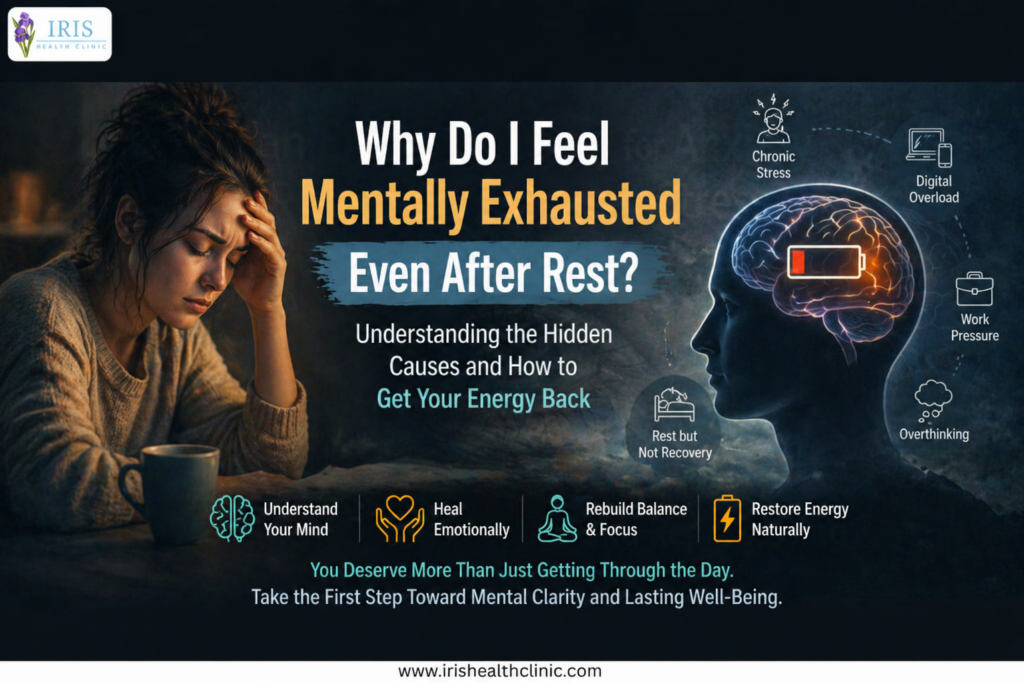
You wake up after a full night’s sleep, yet your mind feels heavy, slow, and drained. It’s frustrating, confusing, and often ignored. Many working professionals push through this feeling, assuming rest should fix everything—but it doesn’t. That lingering fog could be mental exhaustion, and over time, it may quietly turn into emotional burnout.
At Iris Health Clinic,a trusted mental health clinic, we often see people who look fine on the outside but feel completely depleted inside. The good news? This isn’t permanent—and understanding it is the first step toward getting your energy back.
What Does It Really Mean to Feel Mentally Drained?
Mental exhaustion is not just about being “tired.” It’s deeper than that.
It affects how you think, feel, and function daily. Even simple decisions can feel overwhelming. Your brain struggles to stay focused, and motivation drops.
Some common experiences include:
- Difficulty concentrating on simple tasks
- Feeling detached or emotionally numb
- Forgetfulness and slower thinking
- Lack of motivation despite rest
- Irritability without clear reasons
This kind of fatigue builds slowly. It doesn’t always come from one big issue—it’s often the result of ongoing pressure.
Could This Be Linked to Long-Term Stress?
Yes, and this is where many people underestimate the problem.
Long-term stress doesn’t just affect your mood. It rewires how your brain responds to everyday situations. When your system stays in “alert mode” for too long, it stops recovering properly—even during sleep.
This is often connected to chronic fatigue and mental health, where your mind and body are both stuck in a cycle of exhaustion.
Instead of feeling refreshed after rest, you wake up feeling the same—or worse.
Why Doesn’t Rest Fix the Problem?
Rest helps physical tiredness. But mental exhaustion is different.
Your brain needs more than sleep—it needs recovery from emotional and cognitive overload.
Here’s why rest alone may not work:
- Your mind is still processing stress subconsciously
- Unresolved emotions keep draining your energy
- Work pressure continues without boundaries
- Digital overload prevents real mental breaks
- You’re resting physically, but not mentally
Think of it this way: if your mind is constantly “on,” lying down won’t switch it off.
Are You Ignoring the Early Warning Signs?
Sometimes, the problem isn’t obvious—it’s subtle.
Instead of one big change, you experience small shifts in how you think, feel, and respond. These shifts are easy to dismiss, but they follow a pattern.
Look for these changes in your daily behavior:
- Low energy: Feeling drained, even on days with minimal effort
- Avoidance: Putting off tasks you would normally complete quickly
- Disinterest: Losing engagement in work or personal activities
- Emotional shift: Feeling either overwhelmed or completely numb
- Short temper: Reacting more strongly to small inconveniences
What this means:
These aren’t random. They often signal early burnout symptoms, and ignoring them allows the pattern to deepen.
What Are the Real Reasons Behind This Feeling?
There is rarely a single trigger.
Mental exhaustion is usually the result of repeated pressure without enough recovery time. Over time, this builds into a constant mental load.
Common contributing factors:
- Cognitive overload: Too many tasks competing for your attention
- Work pressure: Environments where demands stay consistently high
- Emotional gaps: Lack of support or meaningful connection
- Blurred boundaries: Work spilling into personal time
- Poor recovery habits: Irregular sleep or lack of downtime
- Information fatigue: Constant exposure to screens and notifications
What this means:
These mental fatigue causes don’t just add up—they compound, leaving your mind with no space to reset.
How Does Work Culture Play a Role?
The issue isn’t always your workload—it’s how work is structured around you.
Today’s work culture often encourages constant activity. Slowing down can feel uncomfortable, even when it’s necessary.
This pressure often leads to:
- No real breaks: Working continuously without stepping away
- Extended hours: Finishing work long after your day should end
- Ignored signals: Dismissing signs of mental strain
- Rest guilt: Feeling unproductive when you pause
What this means:
When this becomes routine, your mind never fully switches off—and that’s where exhaustion begins to build.
Why Does It Feel Worse Even After a Weekend Off?
You take time off, but the relief doesn’t last.
That’s because the issue isn’t physical tiredness—it’s unresolved mental load that continues running in the background.
Here’s what’s actually happening:
- Unresolved stress: The core pressure is still present
- Mental anticipation: You’re already thinking about what’s next
- No emotional reset: Your break didn’t process what you’re feeling
- Carried load: Ongoing thoughts and responsibilities remain active
What this means:
This is how chronic fatigue mental health patterns develop—rest happens, but recovery doesn’t.
When Should You Take This Seriously?
Not every bad day is a problem—but repeated patterns are.
If this state continues, it’s a sign your system needs support, not more pressure.
Take it seriously if you notice:
- Performance drop: Your work quality or speed is declining
- Disconnection: You feel distant from people around you
- Low focus: Even simple tasks require extra effort
- Constant overwhelm: You feel mentally overloaded without clear reasons
- No recovery: Rest no longer improves your energy
What this means:
This doesn’t resolve by pushing harder. The earlier you address it, the easier it is to recover.
What Actually Helps You Recover Mentally?
Recovery is possible—but it requires the right approach.
Here’s what truly helps:
1. Structured Therapy Support
Talking to a professional helps you process stress and identify triggers.
2. Outpatient Mental Health Care
Flexible options like outpatient treatment mental health programs allow you to get help without pausing your daily responsibilities.
3. Setting Clear Boundaries
Limiting work hours and screen time protects your mental space.
4. Rebuilding Daily Routines
Consistent sleep, breaks, and mindful habits improve recovery.
5. Reducing Cognitive Overload
Focusing on fewer tasks at a time helps your brain reset.
These steps don’t just treat symptoms—they address the root cause.
How Can Iris Health Clinic Support You?
At Iris Health Clinic, we focus on real, practical recovery—not quick fixes.
Our approach includes:
- Personalized therapy sessions
- Outpatient programs designed for working professionals
- Stress and burnout management plans
- Emotional resilience training
- Ongoing support for long-term improvement
We understand that your schedule matters. That’s why our care is designed to fit into your life—not disrupt it.
What Small Changes Can You Start Today?
You don’t need to overhaul your life overnight.
Start with small, realistic steps:
- Take short breaks during work hours
- Limit screen time before bed
- Practice saying “no” to extra workload
- Spend time without digital distractions
- Reflect on what’s draining your energy
Even small changes can create noticeable improvement over time.
What Does Real Recovery Look Like?
Recovery isn’t instant—but it’s achievable.
You’ll start to notice:
- Improved focus and clarity
- Better emotional balance
- Increased motivation
- Feeling refreshed after rest
- Reduced stress and overwhelm
It’s not about becoming perfect—it’s about feeling like yourself again.
Ready to Take Back Your Energy?
If you’ve been feeling drained for longer than usual, don’t ignore it.
Mental health is just as important as physical health. And the sooner you address it, the easier recovery becomes.
At Iris Health Clinic, we’re here to help you move from constant exhaustion to steady clarity and energy.
Because you deserve more than just getting through the day—you deserve to feel fully present in it.
In the end, recognizing mental exhaustion early can prevent deeper struggles like emotional burnout, helping you regain control over your life.
Key Takeaways:
- Mental exhaustion goes beyond normal tiredness and affects focus, emotions, and productivity.
- Long-term stress is a major contributor and often goes unnoticed
- Rest alone may not fix mental fatigue—deeper recovery is needed
- Early signs should not be ignored as they can lead to burnout
- Therapy and outpatient care offer practical, flexible recovery options
- Small daily changes can significantly improve mental energy over time
FAQs:
2. Is mental exhaustion the same as burnout?
Not exactly. Mental exhaustion can lead to burnout if it is not treated for a long period of time.
3. Can therapy really help with mental fatigue?
Yes, therapy helps identify triggers and provides tools to help and offer strategies to reduce stress.
4. How long does it take to recover from burnout?
The recovery time is different, but regular care and changes in lifestyle can speed up recovery.
5. When should I seek professional help?
If exhaustion has been affecting your day-to-day life for a long time, it's the right time to seek out an expert.