
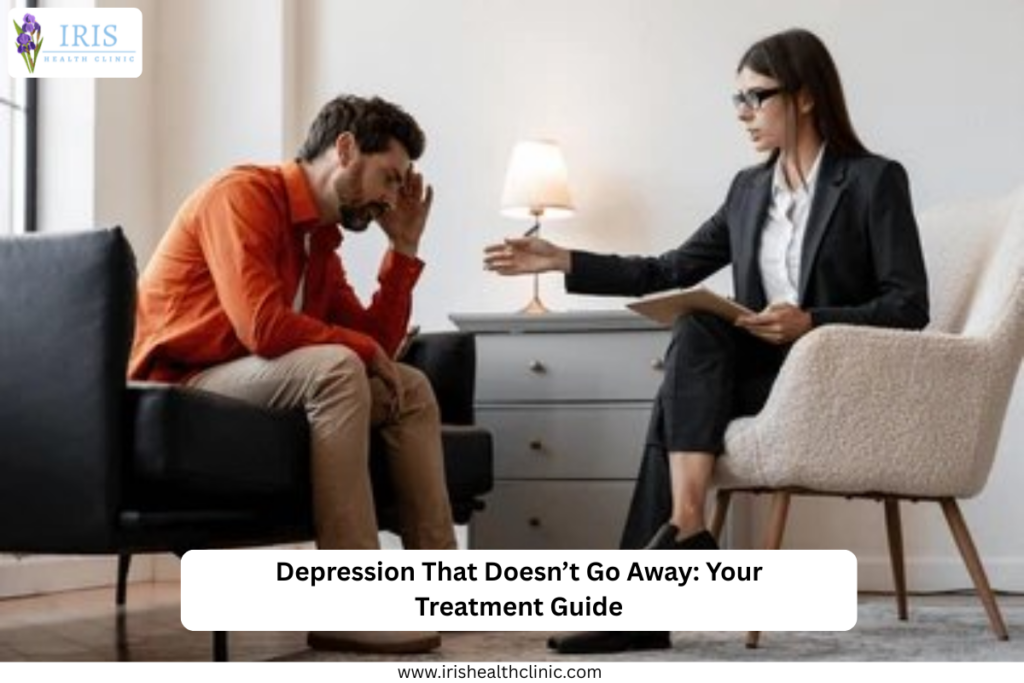
Depression can seem like an endless fog, and for many people around the world, it does just that. While there are those who get over their first instance of depression without another one following, there are others who continue to experience depressive symptoms for several months, even years.
If you feel hopeless and no depression treatment options have helped so far, remember you are not alone, and you can still find help. Over the last few decades, researchers have developed new depression treatments, giving sufferers a fresh chance at a life free from despair. At Iris Health Clinic, a caring group of specialists awaits you.
Key Takeaways
- Depression, which does not respond to first-line treatments, is medically accepted and is not considered a personal weakness.
- Persistent Depressive Disorder (also known as dysthymia) is an ongoing form of depression requiring special treatment.
- There are a variety of new, effective treatments for treatment resistant depression other than regular antidepressants.
- Using a combination of treatment methods yields the most positive results.
- Consulting specialists at the onset of symptoms may greatly reduce the time period and severity of depression.
What is Persistent Depressive Disorder?
Persistent depressive disorder (PDD) was previously known as dysthymia. It is an ongoing depression that lasts for a minimum of two years. Even though it might be milder than major depression, its relentless quality ensures that its effects are equally devastating, if not more.
The following are common symptoms of persistent depressive disorder:
- Persistent feelings of depression for at least two years
- Fatigue and loss of energy
- Inability to concentrate and indecisiveness
- Hopelessness and self-worth issues
- Sleep and appetite changes
- Low self-esteem
Due to their persistence, patients may not know that they have depression, thinking that they have always been this way.
Why Is Depression Sometimes Untreatable?
There are several reasons why treating depression is challenging:
- Biological differences: The levels of neurotransmitters like serotonin, dopamine, and norepinephrine vary from person to person, rendering a universal treatment ineffective.
- Genetic predisposition: If you have a family history of depression, your brain chemistry might react differently to depression treatment.
- Trauma: An unresolved past trauma, particularly childhood trauma, can cause the brain to remain in survival mode.
- Associated disorders: Anxiety, chronic pain, thyroid dysfunction, or addiction can hinder recovery.
- Medication compatibility: Antidepressants do not always work well with each patient’s body chemistry.
Knowing what makes your depression resistant to treatment allows your medical team to make better-informed decisions regarding depression treatment options.
What is Treatment-Resistant Depression?
If an individual does not react effectively to treatment with two or more antidepressant medications, it is known as treatment resistant depression (TRD). About 30% of patients suffering from major depressive disorder have TRD, which is the most difficult psychological disorder to treat.
However, this should be noted that TRD cannot be viewed as a disease without any cure. This condition is simply defined by the fact that first-line medications did not suit the patient.
Which Are the Most Effective Treatments for Depression Available Today?
In contemporary psychiatry, many treatments exist besides the standard antidepressants. Some of the most scientifically backed depression treatments include the following:
Changes to Medications
- Changing the class of antidepressants (from SSRIs to SNRIs or tricyclics).
- Augmentation therapies using lithium, atypical antipsychotic drugs, or thyroid hormones in conjunction with other medications.
- Genetic-based medication selection through pharmacogenomic testing.
Psychotherapy
- Cognitive Behavioral Therapy (CBT) focusing on correcting maladaptive thoughts.
- Dialectical Behavior Therapy (DBT) is effective for people with difficulties regulating emotions.
- Psychodynamic therapy for treating unconscious emotional conflicts.
Brain Stimulation Therapies
- Transcranial Magnetic Stimulation (TMS): Involves magnetic stimulation of inactive regions in the brain. The FDA has approved TMS, which is widely used in cases of resistant depression.
- Electroconvulsive Therapy (ECT): Very effective in cases of extremely serious or even life-threatening forms of depression; much safer and more tolerable than older approaches.
- Ketamine/Esketamine (Spravato): Fast-acting spray for resistant cases that can take effect in a matter of hours.
Lifestyle and Integrated Therapies
- Aerobic exercise, which is highly effective even in moderate cases (comparable to drug treatment).
- Anti-inflammatory dieting and gut bacteria regulation
- Proper sleep management.
- Cognitive therapy based on mindfulness for preventing relapses.
Is Therapy Enough to Cure Chronic Depression?
Yes, in many cases. For moderate and severe forms of depression, therapy , especially CBT, results in long-lasting changes in brain activity and mental processes. It outperforms medication, whose benefits dissipate after some time. In the case of chronic depressive disorders and resistant depression, combining medication and therapy yields the best results.
It all comes down to regularity. To be effective, therapy must be conducted regularly over several months.
How Do Lifestyle Adjustments Work?
It may seem simplistic, but it’s scientifically backed. Exercise raises levels of brain-derived neurotrophic factor (BDNF), which repairs and builds new neural pathways damaged by prolonged stress. Your diet affects the condition of your gut microbiome, and there is evidence that the gut microbiome regulates mood via the gut-brain axis.
Small changes to your routine like sleeping on schedule, limiting alcohol consumption, moving around every day, and maintaining social bonds can greatly help formal therapy and prevent relapse.
Find Your Way Back with Iris Health
Chronic depression does not have to be what you identify yourself with forevermore. With the right tools, strategies, and healthcare providers, healing is always an option. A clinic that is experienced in helping individuals trapped by their own chronic conditions is the Iris Health Clinic.
If you are tired of living the depressive lifestyle, do something about it now! Let Iris Health Clinic assist you in gaining back control of your life.
FAQs:
Are PDD and major depression the same?
No, PDD is milder but of longer duration (more than two years), whereas major depression experiences are intense but may occur briefly.
Am I going to get better from treatment-resistant depression?
Yes. Recovery is possible through proper application of various types of innovative treatments.
Is ketamine treatment safe for depression?
Yes, as long as it is performed under medical guidance, esketamine (Spravato) has been approved by the FDA.
Do I have to try other antidepressants if two don’t help?
It's advisable that you visit your healthcare professional who may advise you on further tests or treatment.