
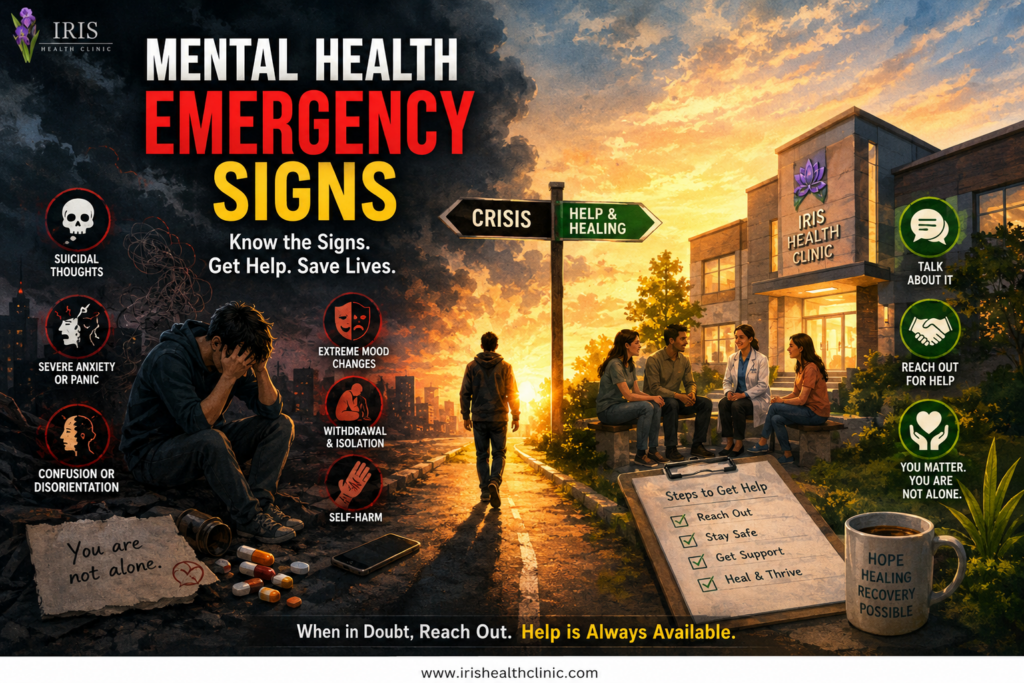
Mental health emergencies may happen without much notice, leaving people in doubt about what to do next. Recognizing the signs of a mental health emergency can be crucial for a person’s well-being; if the condition worsens to a point where one feels emotionally or psychologically unsafe, contacting professionals to help manage the situation would be an excellent decision.
The best place to seek emergency mental health services is at Iris Health Clinic. The professionals here will help an individual to feel better and deal with the issue safely. It is always good to understand when to take action regarding emergency mental health services because they are bound to happen sooner or later.
Key Takeaways
- Psychiatric emergencies constitute medical emergencies that need prompt care and assistance.
- The identification of potential threats can help avert any worsening of the situation.
- Crisis interventions work quickly to stabilize one’s condition when administered at the right time.
- Urgent psychiatric care is available for anyone who might require such assistance.
- Knowing when to seek urgent help can save a life — yours or someone else’s.
What is a Mental Health Emergency?
This type of emergency arises when thoughts, feelings, or actions pose an immediate threat of injury or harm to a patient or others around them. It is more severe than mere feelings of depression or anxiety and requires urgent action on behalf of the person in question.
Examples are:
- Thoughts of suicide or self-harm
- Experiencing severe dissociation or being out of touch with reality
- Behaviors that are aggressive and uncontrollable due to a mental illness
- An extreme mental reaction caused by substance abuse
- Inability to perform even simple tasks such as talking or eating
These are definitely the cases where one should not hesitate.
What Are the Red Flags to Look Out for?
Identifying a mental health emergency early on can be crucial for successful crisis intervention. The following are some of the most important warning signs:
Thoughts of Suicide or Self-Harm
Any mention of death wishes, feelings of uselessness, or the disposal of one’s favorite belongings must be taken very seriously. Never assume such statements are simply an attempt to draw attention.
Psychosis, Including Severe Paranoia and Hallucinations
If someone starts to experience auditory or visual hallucinations or feels severely threatened by people close to them, it could indicate the onset of psychosis.
Extreme Changes in Moods
The fast transition from severe depression to intense euphoria, or agitation, may indicate the onset of mania. Such an event may quickly worsen and put someone’s life in danger if no help comes in time.
Self-mutilation
Any physical injury, like cuts, burns, or bruises caused by a person himself/herself, is an obvious sign of psychological pain that needs instant attention.
How Do You Know When to Seek Urgent Help?
One of the most important things you need to know is when to ask for urgent help. This might seem obvious, but people tend to hold back because they fear they are being too dramatic. When someone’s safety is involved, you can never be too careful.
Urgent help should be sought right away if someone:
- States a definite intention or plan of hurting themselves or others.
- Acts aggressively or destructively.
- Cannot be reached, either in their mind or emotionally, for a long time.
- Has collapsed, stopped communicating, or is unable to function properly.
- Uses drugs excessively, putting themselves in real physical or psychological danger.
Can Children and Adolescents Experience Mental Health Crises?
Yes, but the symptoms may be quite different from those experienced by adults. Symptoms of mental health crises in children and adolescents include:
- Sudden withdrawal from social circles
- A rapid decline in academic progress
- Frequent and persistent temper tantrums
- Making references to death or “not belonging here anymore”
- Engaging in private acts of self-harm
It is important for parents and caregivers to keep an eye on any behavioral shifts that could indicate mental health issues. The sooner a mental health crisis is addressed in children and adolescents, the greater the chances of positive psychological development down the road.
What Should You Do During a Mental Health Emergency?
In case you face an emergency situation with your loved one, adhere to the following actions:
- Maintain your composure: Your actions can help in controlling the emotional temperature.
- Eliminate all hazards: In case there is any kind of weapon or drug or anything that poses a potential threat, ensure that it is removed silently.
- Avoid debating or minimizing the situation: Stay away from using terms such as “you’re overreacting” or “please calm down.”
- Ask for help: Reach out to mental health emergency services or the 988 Lifeline, or call the emergency department right away.
- Stay with your loved one until professionals arrive.
Your Way to Help for Mental Wellness
Identifying an indicator of a mental health crisis isn’t enough; it is vital to know where to go from there. Iris Health Clinic provides professional support from experienced mental health providers who will help both people in need and their loved ones get through the hard times. Iris Health Clinic, designed entirely with the patient’s welfare in mind, offers same-day assessments, therapy, and counseling. Whether a crisis is about to happen or not, it is never too late to make a change.
FAQs:
What is crisis intervention?
Crisis intervention is an immediate intervention by professionals to stabilize someone experiencing acute psychological stress.
When should I dial 911 versus the number for mental health emergencies?
Dial 911 for any situation where there is immediate physical harm or danger. Dial 988 for emotional problems that don't require physical assistance.
Do mental health crises ever go away on their own?
Some may reduce in intensity on their own; however, professional assessment is highly recommended following any episode of mental crisis.
How can mental health emergencies benefit from emergency interventions?
Mental health emergencies receive immediate assessment, stabilization, psychiatric treatment when required, and plans for further treatment.